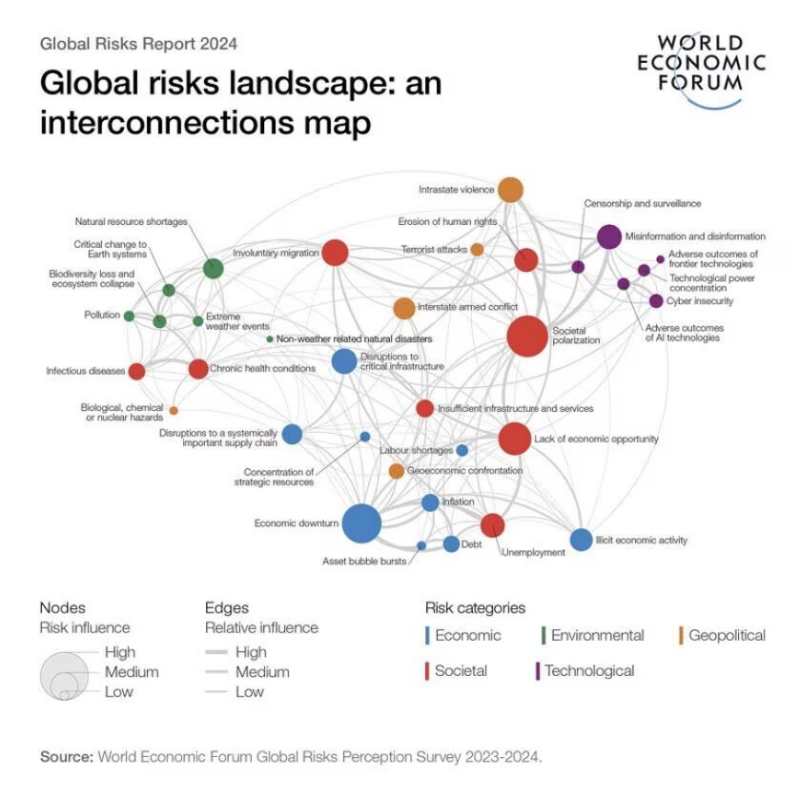
For a long time, investors treated geopolitics as something that occasionally startled markets, but did not define them. That view is outdated. Today, geopolitical events are not just background noise; they are part of the core machinery that moves asset prices, changes corporate strategy, and shapes inflation, interest rates, and capital flows.
This shift matters because markets no longer react only to earnings reports and central bank decisions. They also react to wars, sanctions, trade barriers, election outcomes, shifting alliances, and government efforts to secure supply chains. In other words, politics is no longer separate from markets — it is embedded in them.
From shock to structure
In the past, a geopolitical event was often seen as a temporary shock. A conflict would break out, oil prices would jump, volatility would spike, and then investors would move on once the immediate fear passed. That pattern still exists, but it is no longer the whole story.
What has changed is that geopolitics now affects the structure of the economy itself. Companies are redesigning supply chains, countries are pursuing industrial policy, and investors are pricing in more persistent uncertainty. Instead of asking, “Will this event cause a short-term selloff?”, markets now ask, “How will this alter inflation, growth, margins, and risk premia over the next several years?”
That is a much deeper and more lasting influence on asset prices.
Why geopolitics matters more now
Several forces have made geopolitics more important for markets.
First, the global economy is more interconnected, so shocks spread faster. A conflict in one region can affect shipping, energy, semiconductors, fertilizer, food prices, and investor sentiment across the world.
Second, governments are more willing to intervene in markets and trade. Countries are using tariffs, export controls, sanctions, and subsidies as economic tools. That means firms can no longer assume that efficiency alone is the right business model; resilience now has value too.
Third, markets are more sensitive to uncertainty than they used to be. With higher valuations in some sectors and tighter financial conditions in many economies, investors tend to punish uncertainty quickly. Even the possibility of escalation can move stocks, bonds, commodities, and currencies.
The main transmission channels
Geopolitics affects markets through several clear channels.
One is commodity prices. Oil, natural gas, wheat, metals, and shipping costs can all move sharply when supply routes are disrupted or when sanctions limit trade. These moves feed directly into inflation and corporate input costs.
Another is corporate earnings. Companies exposed to global supply chains may face delays, higher transportation costs, or restricted access to key materials. Firms that rely on overseas demand can also suffer when tensions weaken trade or consumer confidence.
A third channel is interest rates and bonds. If geopolitical stress pushes inflation higher, central banks may have less room to cut rates. If the risk is severe enough, investors may demand higher compensation to hold sovereign debt or emerging-market assets.
A fourth channel is equities. Some sectors are especially vulnerable, such as airlines, industrials, retail, semiconductors, and consumer goods. Others may benefit, including defense, energy, cybersecurity, and domestic infrastructure.
Markets are repricing risk
The biggest change is not that geopolitics affects markets — it always has. The bigger change is that markets are now repricing geopolitical risk more frequently and more permanently.
Investors used to think of risk in terms of earnings volatility and recession probability. Now they also think about conflict exposure, trade fragmentation, sanctions risk, and policy unpredictability. That changes how valuation models work. A company with strong earnings may still trade at a discount if its supply chain runs through a politically fragile region.
This is especially important because investors dislike uncertainty even when the immediate damage is limited. Markets are forward-looking, so the mere possibility of escalation can reduce multiples, increase hedging demand, and shift capital toward safer assets.
Winners and losers
Not every company is affected the same way.
Firms with diversified suppliers, pricing power, low debt, and strong domestic demand are usually better positioned. They can absorb shocks more easily and adjust faster when conditions change. Businesses that are heavily dependent on one region, one commodity, or one trade corridor are much more exposed.
Some sectors may even benefit from the new environment. Defense companies can gain from higher military spending. Energy firms may benefit from supply insecurity and elevated prices. Logistics, infrastructure, and cybersecurity firms may also see more demand as governments and corporations prioritize resilience.
At the same time, companies built on low-cost global optimization may struggle. The old playbook assumed stable trade, cheap transport, and low political friction. That world is fading.
What investors should watch
Investors should pay closer attention to a few signals.
-
Trade policy, including tariffs, export controls, and industrial subsidies.
-
Conflict hotspots that could affect energy, shipping, or food markets.
-
Election outcomes that may change fiscal, regulatory, or foreign policy.
-
Sanctions and restrictions that can cut off access to markets or technology.
-
Corporate guidance, especially where management talks about supply chain diversification or input-cost pressure.
The goal is not to predict every geopolitical event. That is impossible. The goal is to understand which assets are most sensitive to these events and to build portfolios that can survive a wider range of outcomes.
A new investment mindset
The rise of geopolitics as a market driver is forcing a mindset shift. Investors can no longer rely only on growth forecasts and valuation multiples. They also need to think about power, policy, geography, and national security.
That does not mean every portfolio should become defensive or cynical. It means risk management has to be broader. Diversification, scenario analysis, and balance-sheet strength matter more in a fragmented world. So does the ability to separate temporary headlines from structural change.
The market is still driven by fundamentals. But the definition of fundamentals has widened. Geopolitics is now part of the equation.
Add comment
Comments
Cannot agree more.
We are bound together. But we also break together.